Solar YOGA
WEB DESIGN
Overview
ROLE.
UX researcher, UX/UI designer
Timeframe.
10 days solo project
TOOLS.
Figma, Notion
Context
Solar Yoga Retreats is a small business that offers retreats in Brazil and Ibiza. The project was initiated to revamp the digital presence and user experience of a specialized business offering yoga and meditation retreats in Ibiza and Brazil. In addition to that, they also offer natural medicine and soul journeys to their customers.
challenge
With the goal of addressing critical online challenges, I embarked on a mission to enhance the booking process, improve communication, and create a high-fidelity prototype. Through comprehensive research and user engagement, I aimed to provide innovative solutions and create a more user-friendly website. This project exemplifies my commitment to delivering user-centric design solutions in niche markets.
01 Research


MARKET ANALYSIS
USABILITY TESTING


USER PERSONA

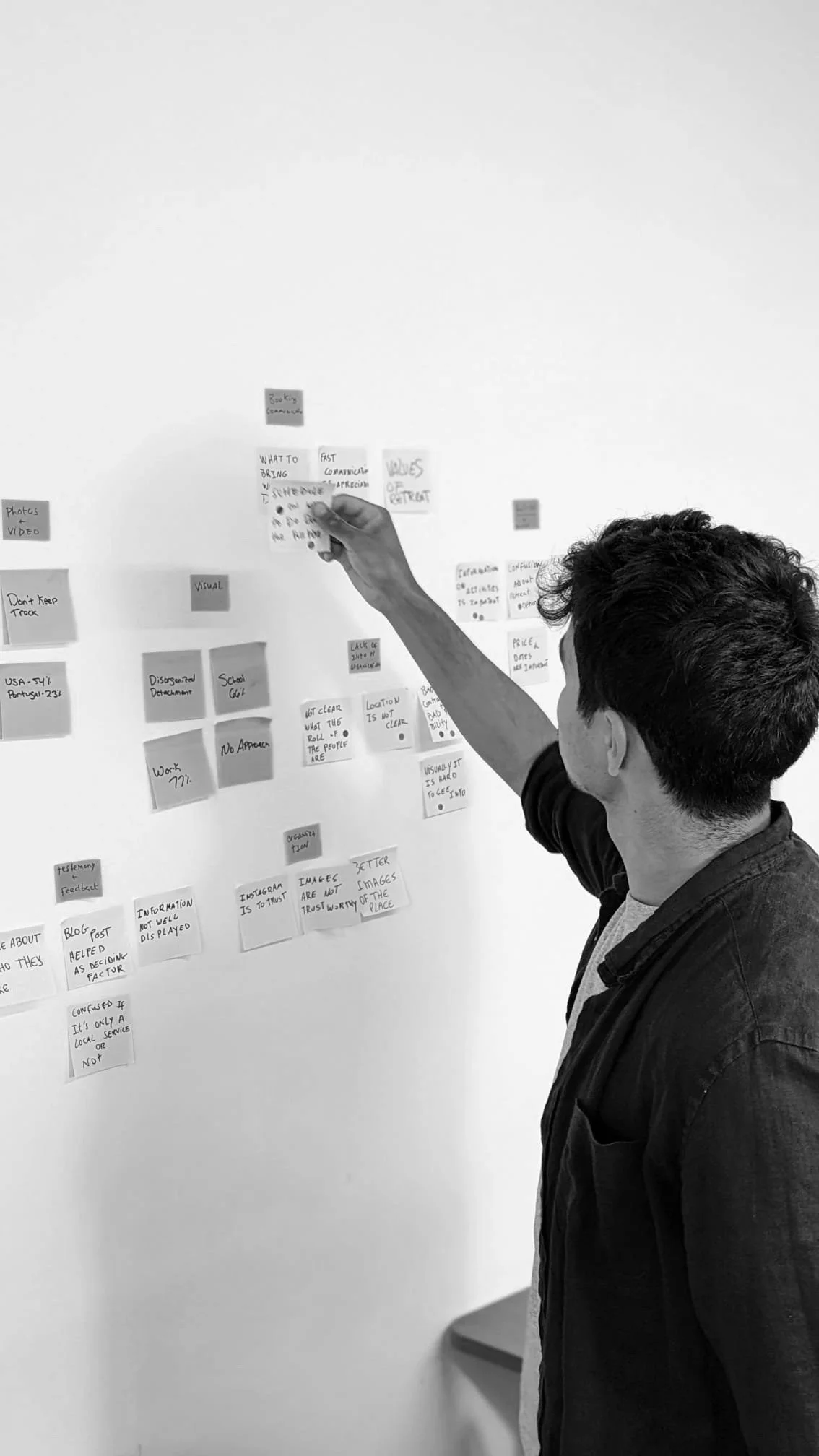
AFFINITY MAP
INTERVIEWS
The project started with a meeting with the stakeholders to align everyone's understanding of the project scope.
I interviewed the founder and owner of the business Ingrid, to understand the business better and the booking process. From the interview with the owner, I identified 3 key points that can be improved.
The current
product
No direct way for the users to book directly
The initial issue is the absence of a direct booking option on the website. When users wish to make a reservation or get in touch with the business, they are required to navigate to the 'Contact Us' page, where they can opt to either send an email or place a phone call to the owner.
01
Challenges in tracking and converting retreat leads
The second point is closely intertwined with the first. Since users are required to initiate direct contact with the owner, it becomes challenging for the owner to monitor and identify potential leads for the company. Consequently, this poses difficulties in effectively following up with website visitors who express interest in attending the retreat. While many customers choose to book their retreats through the platform BookYogaRetreats, it's important to note that the platform charges a significant commission.
02
Difficulty in locating essential information
Lastly, the third point I gleaned from the interview highlights that users encounter difficulty in locating essential information about each retreat. It was observed that website visitors often reach out to the owner with inquiries regarding the retreat, even though the relevant information is readily available on the website. This suggests that there is potential for enhancing the information structure of the website.
03
The BOOKING
PROCESS
In summary, I have pinpointed areas where enhancements can be made to the booking process, offering valuable insights:
01
02
03
Enabling direct bookings and displaying retreat availability for customers.
Prioritizing transparent policies and effective communication for process improvement.
Consider shifting focus towards the business's website to generate more leads independently, minimizing reliance on platforms like BookYogaRetreats, which charge commissions.
USABILITY TESTing insights

“The information on the insights page is confusing, I am not sure what some of the numbers mean”
“The graphs are confusing and it’s difficult to read the labels”
“I am confused about how the filter works, I would like to be able to see specific date ranges in the past”
“There is no possibility to bench mark the information with other data”
“I do not know what some of the titles of graphs and labels mean.
Interview
Following the completion of the usability testing and identification of the main pain points of the testers, I decided to gather further insights into how building owners manage their energy consumption. To achieve this, I conducted interviews with 5 building owners and 1 subject-matter expert (SME).
Interview insights
Expenses data is most important for users
01
Users aspire to align their metrics with a goal they set
0 2
Users want to benchmark data with industry standards
0 3
Users want comprehensive graphs
0 4
PROTO-PERSONA
After collecting all the gathered insights, I developed a proto-persona instead of a user persona due to the fact that my research was based on hypothetical users during Preflet's pilot phase. The proto-persona allows me to effectively define the problem statement by encapsulating the needs, wants, and pain points of a single user.

Sandra Fernandes
42, female
Building Manager
She works for a commercial real estate company that owns and operates multiple buildings in Lisbon. Sarah is passionate about sustainable practices and has been actively involved in initiatives to reduce energy consumption, save expenses, and minimize the carbon footprint of the buildings she manages.
Data-driven insights
Recommended actions to safe energy
Comprehensive analytics
NEEDS
Cost reduction
Improve energy efficiency
Minimize environmental impact
GOALS
02
PROBLEM DEFINITION
Through the process of creating the proto-persona, I could develop a clearer picture of the users' needs, desires, and challenges. Based on those pain points I developed the problem statement.
Problem statement
Sandra needs a comprehensive and actionable dashboard to analyze and track energy consumption because the lack of key information hinders her ability to effectively reduce costs and minimize the carbon footprint of the building.
How might we
01
How might we help Sandra to find the relevant data and insights she is looking for?
02
How might we clarify the information being showcased on the dashboard?
03
Ideation
Based on the research, as well as the design challenge, I defined some goals and features here are the goals I am proposing to achieve:
01
Redesign the filter to enhance precision, enabling users to select specific dates and navigate through time more effectively.
02
Incorporate a feature that enables users to create goals, facilitating the alignment of their energy metrics and providing a framework for tracking progress and performance.
03
Integrate a feature that assists users in benchmarking their energy metrics against both previous periods and industry benchmarks, enabling them to compare and evaluate their performance effectively.
04
Enhance the graphs to create a more comprehensive visual representation that is easily understandable and provides actionable insights to the users.
04
Design
Key Dashboard
Principles
Before proceeding with prototyping, I conducted extensive research on dashboards. It is crucial to recognize the significance of proper dashboard design, as inadequately designed dashboards can hinder the effective communication of valuable information and insights. Moreover, they have the potential to reduce the comprehensibility of the data compared to its original form. Through my research, I identified 4 fundamental principles of dashboard design that should be considered.
Effective information presentation
01
Always begin with a clear understanding of the end-users the dashboard is intended for.
Visual consistency
0 2
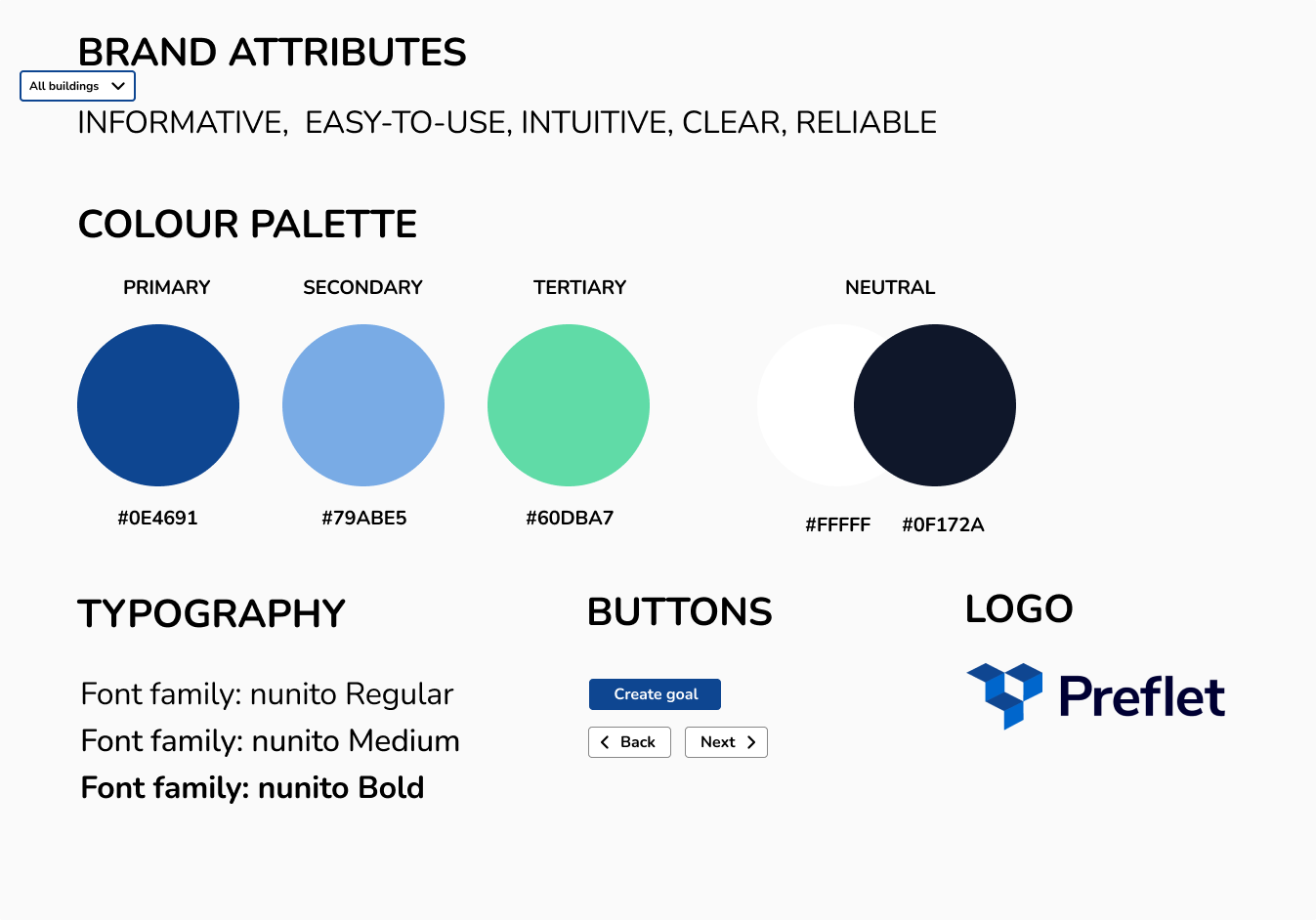
Clear dashboard design is ensured and delivered through consistent adherence to and use of typography, colors, and graphic elements.
Efficient interactions
0 3
It is important to eliminate unnecessary graphical elements, align filters and interactions with the user's workflow
Effective use of language
0 4
Language is as much a design for user experience tool as color, font, and style.
BRANDING
05
TESTING & ITeRATIONS
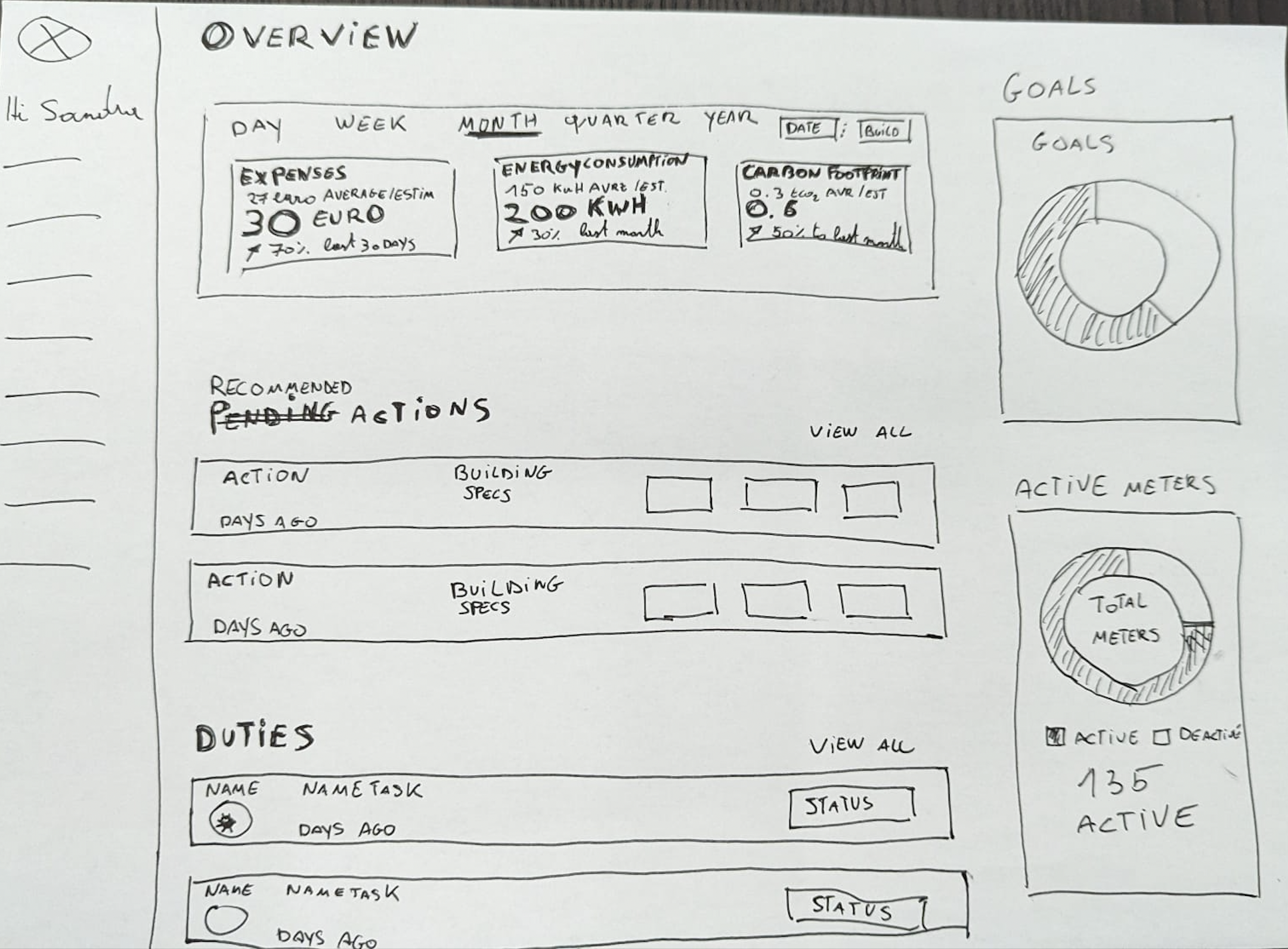
Low-fi prototype Overview page
During this phase, I conducted two rounds of testing to ensure the coherence and effectiveness of my low-fidelity designs before progressing to mid-fidelity prototypes and finally the high-fidelity prototype. Below, I have outlined the primary differences observed between these 3 fidelity levels.
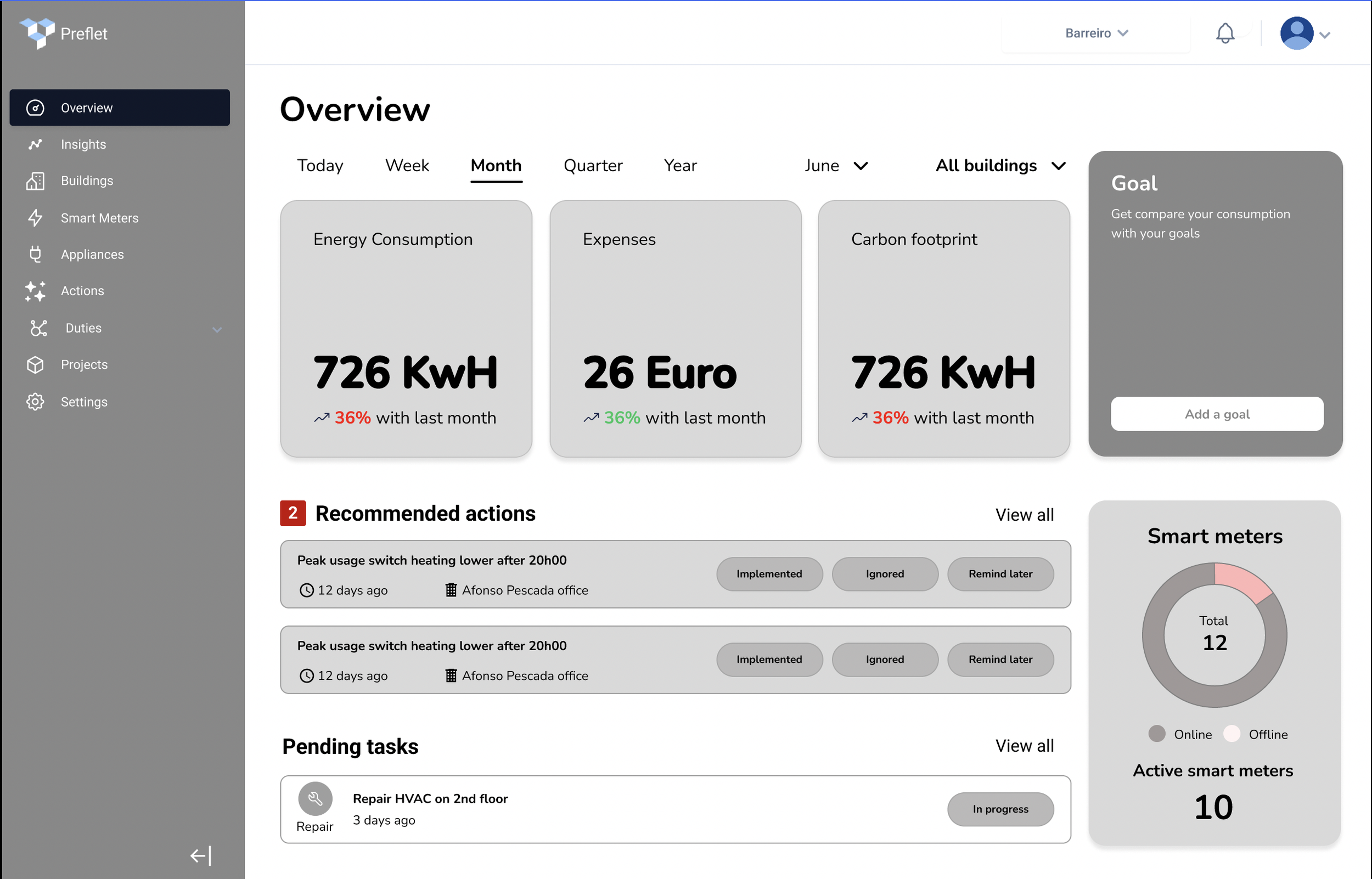
Mid-fi prototype Overview page
Implemented the addition of action count within the actions section, aiming to provide users with a clear indication of the number of actions that require their attention.
Addressed the issue of user confusion by renaming the section previously labeled as "Duties." The new name assigned to this section is "Pending Tasks," as it was found to be more intuitive and user-friendly during testing.
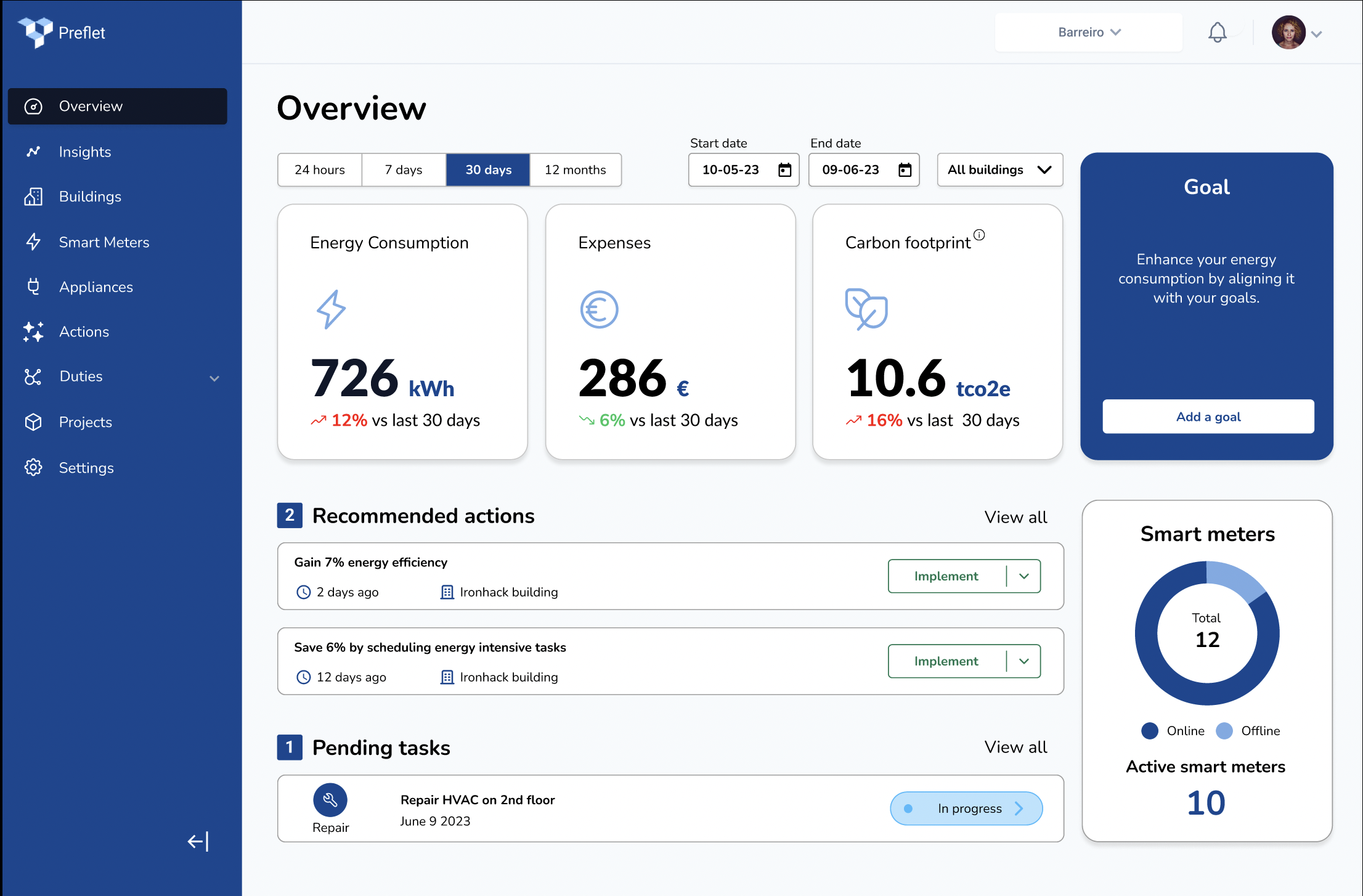
High-fi prototype Overview page
Enhanced the filter functionality to provide a more specific date range by adding an end date. I replaced it with "30 days." This modification resulted in improved clarity, as users found the term "30 days" to be more understandable and precise in the context of the filter.
To minimize the cognitive load on the dashboard, I simplified the buttons within the action card. While the "implemented" option remains visible on the card, I streamlined the interface by introducing a dropdown menu for accessing other options. This design change allows users to easily access additional actions by simply clicking on the dropdown, providing a more intuitive and efficient user experience.
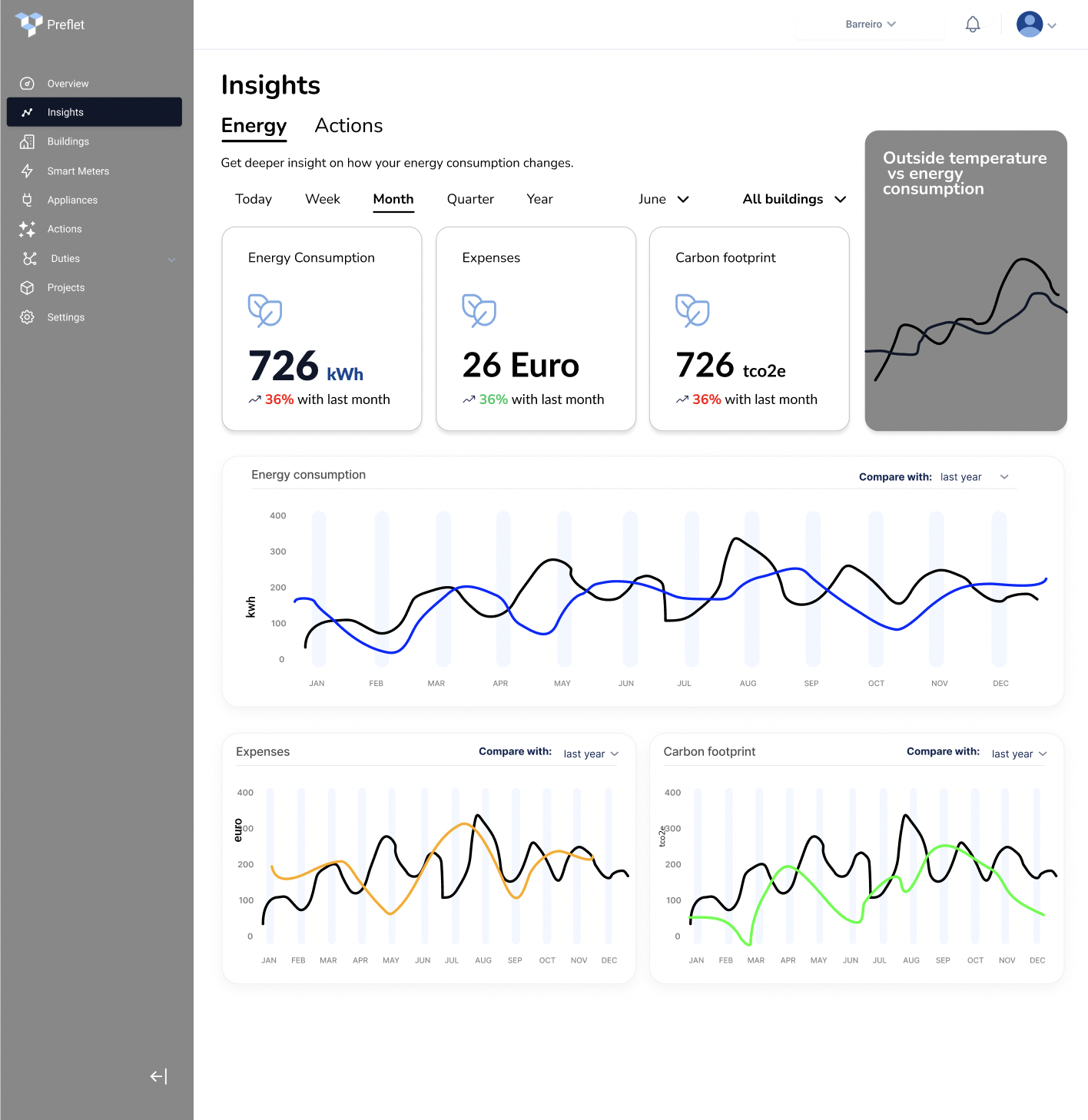
Mid-fi prototype Insight page
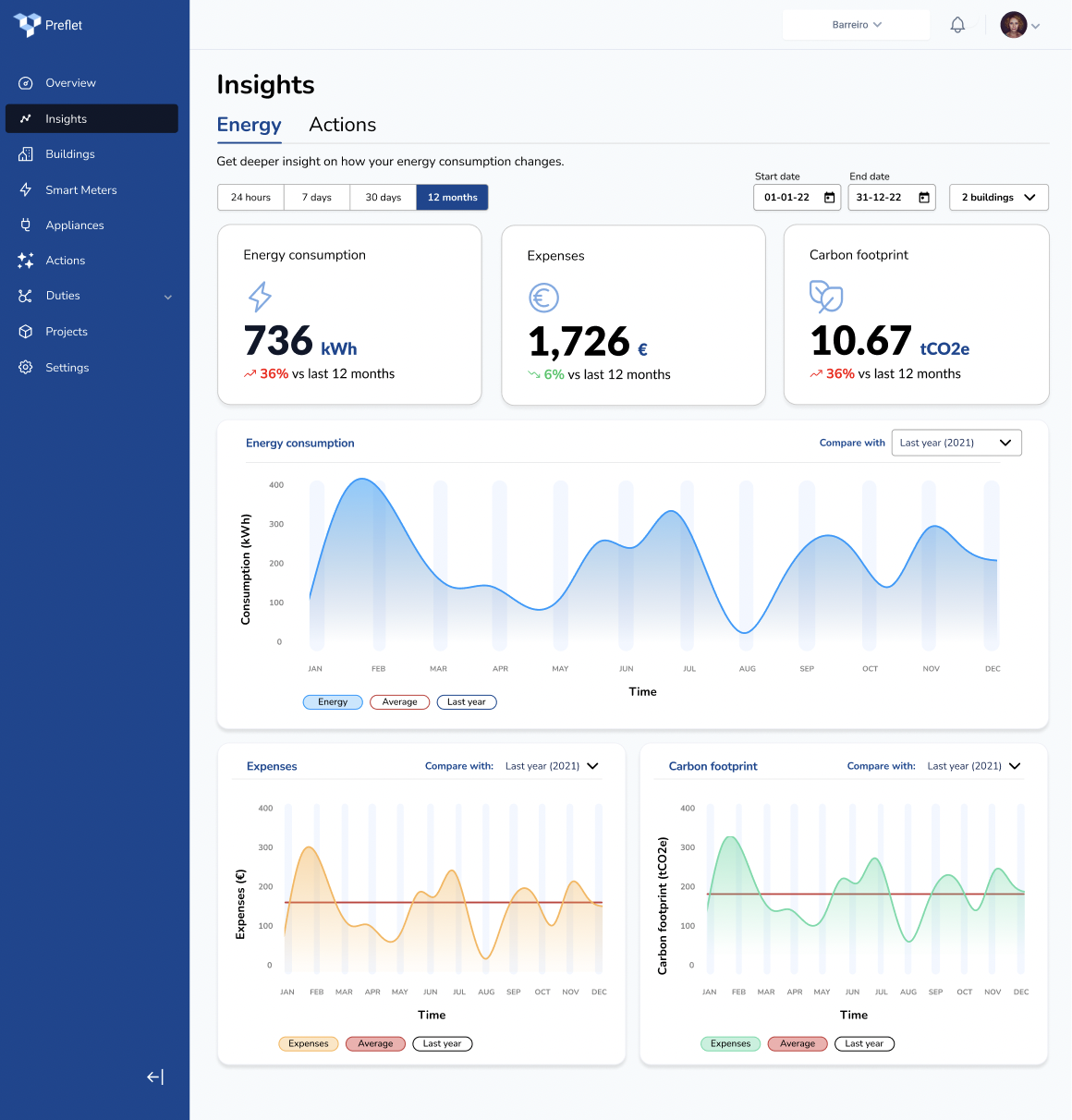
High-fi prototype Insight page
Conducted quantitative research to determine the preferred metrics for users. The results indicated that the temperature/energy consumption graph was not considered essential by the users and was therefore not on the high-fidelity prototype.
Implemented the addition of buttons on the graphs, allowing users to display multiple graph lines and enabling them to compare data effectively. This feature enhances the user experience by providing the option to visually analyze and compare different data sets within the graphs.
06
FINAL MOCKUPS
07
Next steps
Enhance the gamification elements within the goals section on the overview page to create a more immersive experience.
01
Continuously enhance and expand the functionality of the mobile app version
0 2
Generate a comparative graph illustrating the performance of the same period this year in relation to the corresponding period of the previous year.
0 4
Include interactive graphs that enable the comparison of energy consumption among different buildings.
0 5
08
Learnings
Having completed my first project with a real client, it was fascinating to learn about the dynamics between the client and myself as a designer. I realized that while understanding and meeting the needs of the users is crucial, it is equally important to align with the client to ensure effective collaboration and create a final product that satisfies all stakeholders. Below are some of the other learnings of this project.